The Huancayo-based non-profit, Blue Sparrow, traveled to San Martin de Pangoa this weekend to speak about their experiences distributing microloans in El Tambo and Huari, other localaties in Peru. They shared the training structure and handouts they use, interviewed women selling their products in the market, tasted some great coffee, and met with cooperative staff in order to train the trainer, Yenifer Sobrado. She is interested in formalizing the microloan experience for the members of CAC Pangoa and intends to tailor a similar type of training for the coffee program as well as for the revolving loan fund for women.
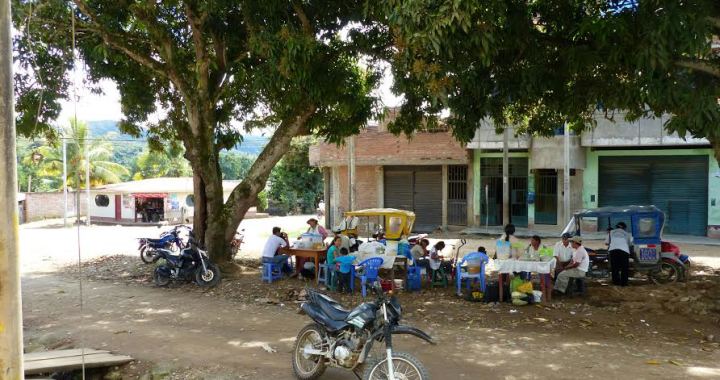
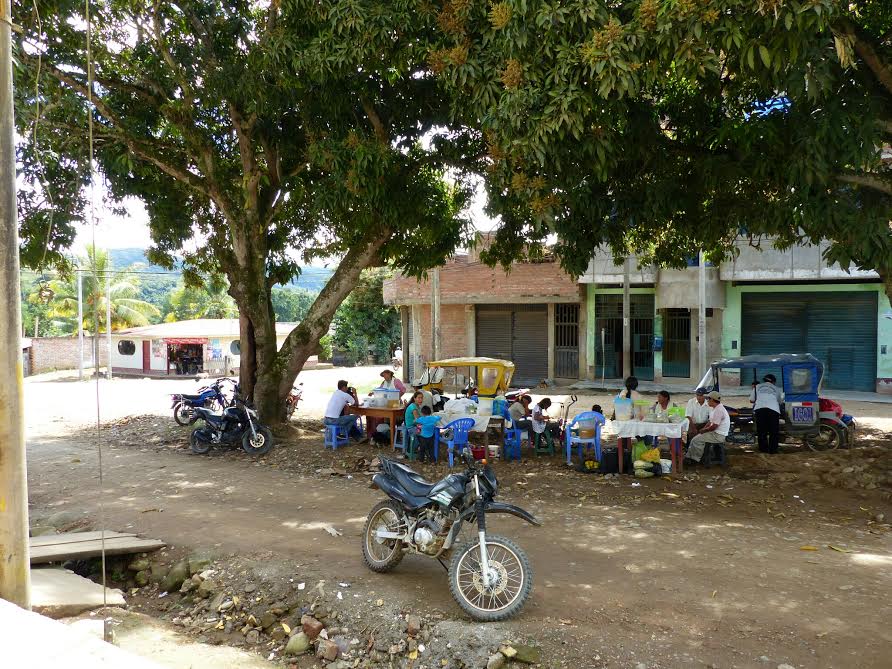
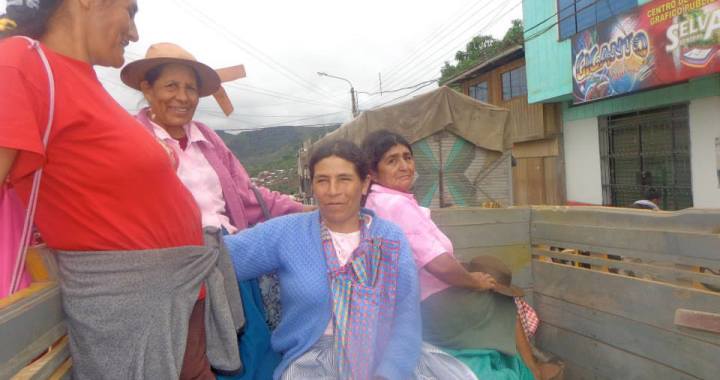
Women of CODEMU at the Saturday market outside CAC Pangoa’s offices
That Blue Sparrow provided a training to CAC Pangoa rather than funds for loans is two-fold. One, Blue Sparrow charges interests on their loans, and thus their funding is not a match for the cooperative. CAC Pangoa does charge interest on some loans, though it remains at 1% for symbolic purposes, to motiviate partipants. A non-profit creating a robust microloan fund typically must charge a higher interest rate than 1% to remain viable, making such non-profits difficult for coffee farmers or coffee cooperatives to partner with. That doesn’t mean their trainings or business development support teams will not be useful to farmers who’ve taken out loans at 0% or 1%. Payback is tough, and Yenifer hopes to provide a little more attention to the members who are struggling.
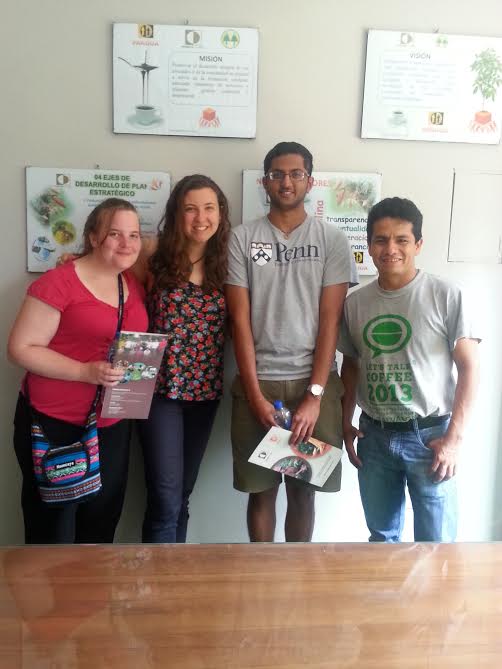
Students from Wharton with Albino Nuñez
Meanwhile, Mano, a coffee shop in Hong Kong, will be raising money for the women of CODEMU to add to their loan fund. Money from their fundraiser will go directly to this group so they may continue to take out loans, attend the Saturday markets, and keep growing lots of women’s coffee. All thanks to Courtney Dettrich, a consultant for Mano with a passion for coffee and development. Her funds will be raised alongside the funds raised this Thursday at Pete’s Candy Store in Brooklyn, where Peck, Lee Godleski, and Isaac Gillespie will sing to raise loan money for CODEMU. Updates to follow!
One of the goals of The Chain Collaborative is to raise awareness about the supply chain and the realities of the coffee lands, as well as what it means to be a sustainable coffee farmer. One reason Fair trade has been helpful to farmers is that payment comes in stages: pre-harvest, at harvest, and then months after harvest to redistribute profits from the sale of the coffee. This type of payment structure is critical for coffee-growing families because it allows them to spread their income out throughout the year. This stands in stark contrast to what life is like selling your coffee to middlemen, where you receive only one payment that is supposed to last the rest of the year. Even still, three payments for coffee is never enough to support coffee-growing families, especially when coffee is so vulnerable to climate change, disease, and other occurences that strongly affect the harvest.
As such, income diversification is extremely ciritical to producers, meaning that helping families remain economically stable also means helping them do things that are not coffee-related. Many women’s committees and women’s loan programs in cooperatives do just that: offer women access to loans to help them create alternative sources of income for their families. In rural communities, often this means loans for raising small animals, bee-keeping, or making food to sell in local markets.
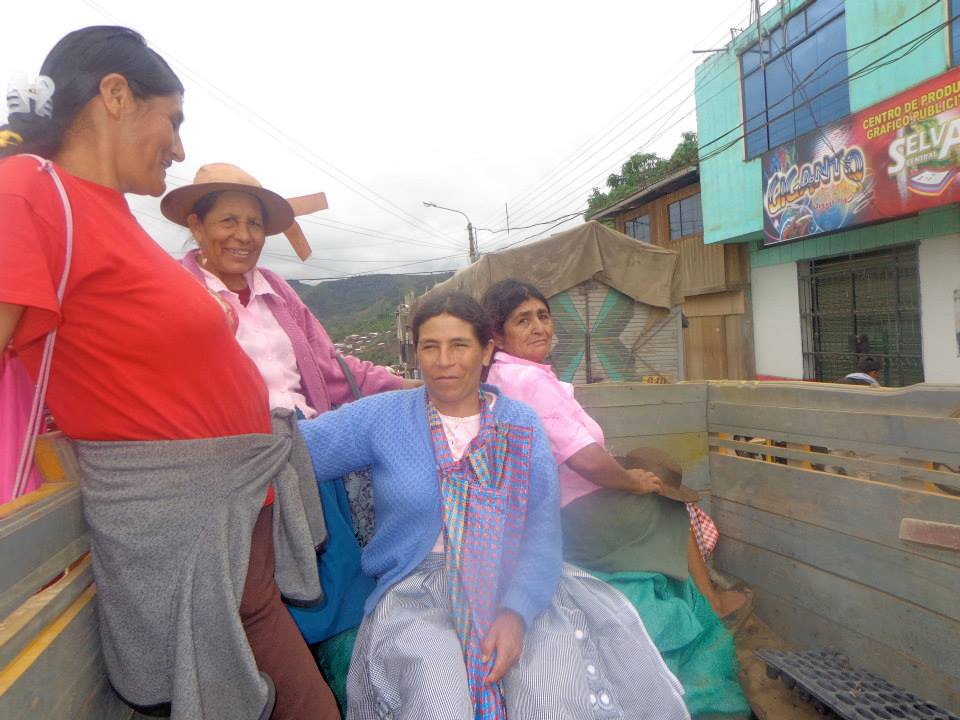
A few members of CODEMU
Unfortunately, many women are finding access to low or no-interest loans through a rolling fund in the cooperative without having had any access to business training or financial management. They learn by doing, which is a great method when you have the money to experiment with. As many Andean families are subsistence farmers struggling from one year to the next, and as coffee rust continues to attack large plots of land in Peru, most women don’t have money to experiment with. Their business has to work because if it doesn’t, their loans will not be repaid, and other women will lose the chance to take out their own loans from the rolling fund. If no money comes back, no more can be lent out.
Selmer, a technician at CAC Pangoa, lamented that one thing the cooperative lacks is program staff. Fair trade premiums offer funds for loans, and the cooperative administers those loans, but there is nobody who works to check up on the borrowers and address any of their problems or concerns. Any time I have visited rural communities, the most commonly stated request is more attention and more visitation from the cooperative, but often, given the rural landscape and the enormous caseload of technicians, they struggle to complete the work they are already tasked with. Doing more work isn’t always in the cards. Furthemore, they are not program managers, they are technicians who help farmers improve their harvest. They are not loan agents and were never taught to be.
The Chain Collaborative, in response to this problem, has begun our collaboration with CAC Pangoa with this sentiment from Selmer in mind. On top of helping companies raise money for the women’s committee’s loan fund, we are brainstorming ways to provide more programmatic support, and we plan to build this in to the development strategy of CODEMU.
Blue Sparrow is a US-based 501(c)(3) non-profit organization that works with rural communities, children, and adolsecents in poverty. They are based in Huancayo, Peru, which is about an eight hour bus ride from San Martin de Pangoa, where cooperative CAC Pangoa is located. For anyone who has traveled around Peru, whenever you hear that something is an eight hour bus ride away, the first four words you might say are, “Really? That’s so close!” At least, that’s what I said to myself after spending over sixteen hours traveling from Lima to San Martin de Pangoa, even though Google promises a distance of 7 hours.
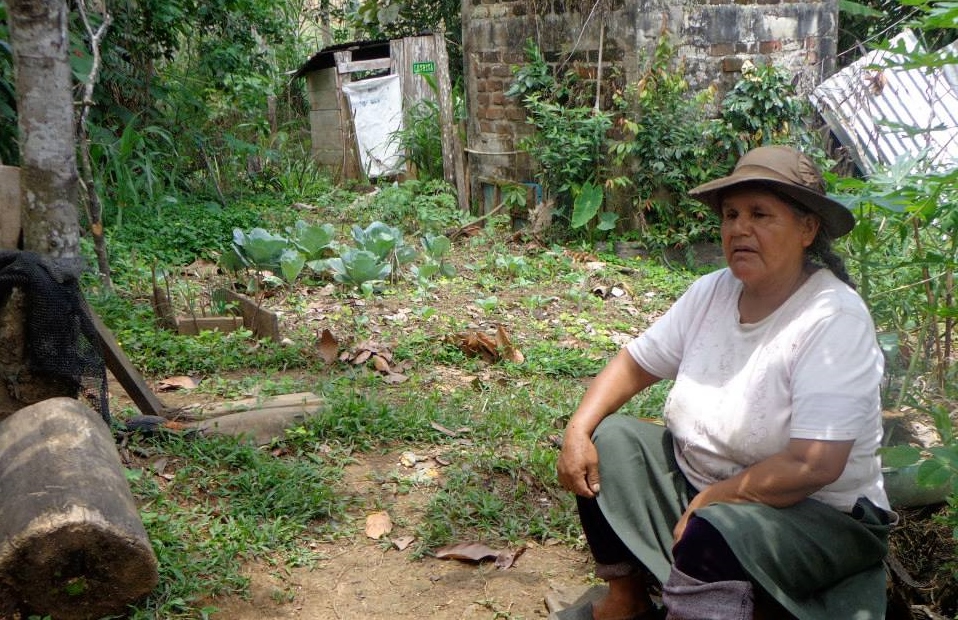
Señora Obdulia
The Chain Collaborative has connected CODEMU with Blue Sparrow, which currently operates their microfinance program from Huancayo in support of individuals and families to help them create alternative sources of income. They are working with a group from University of Pennsylvania’s Wharton School of Business to provide business training to their clients and partners. We’re very excited to announce that this group will make the (very short) 8 hour trip to San Martin de Pangoa this Saturday to meet the women of CODEMU, spend time with the cooperative, and provide training to the women’s committee!
Their goal is to provide a training to anyone in the community interested in business development, and they will focus special attention on “training the trainer.” They hope to equip the board of directors of CODEMU with the tools to help the other members of the committee. These trainers will hopefully be able provide the type of support Selmer had noted was lacking–attention for each individual borrower. This is only the begining, and The Chain Collaborative looks forward to developing their efforts for more programmatic support into the future!
Thanks for reading and stay tuned for updates on the training!